
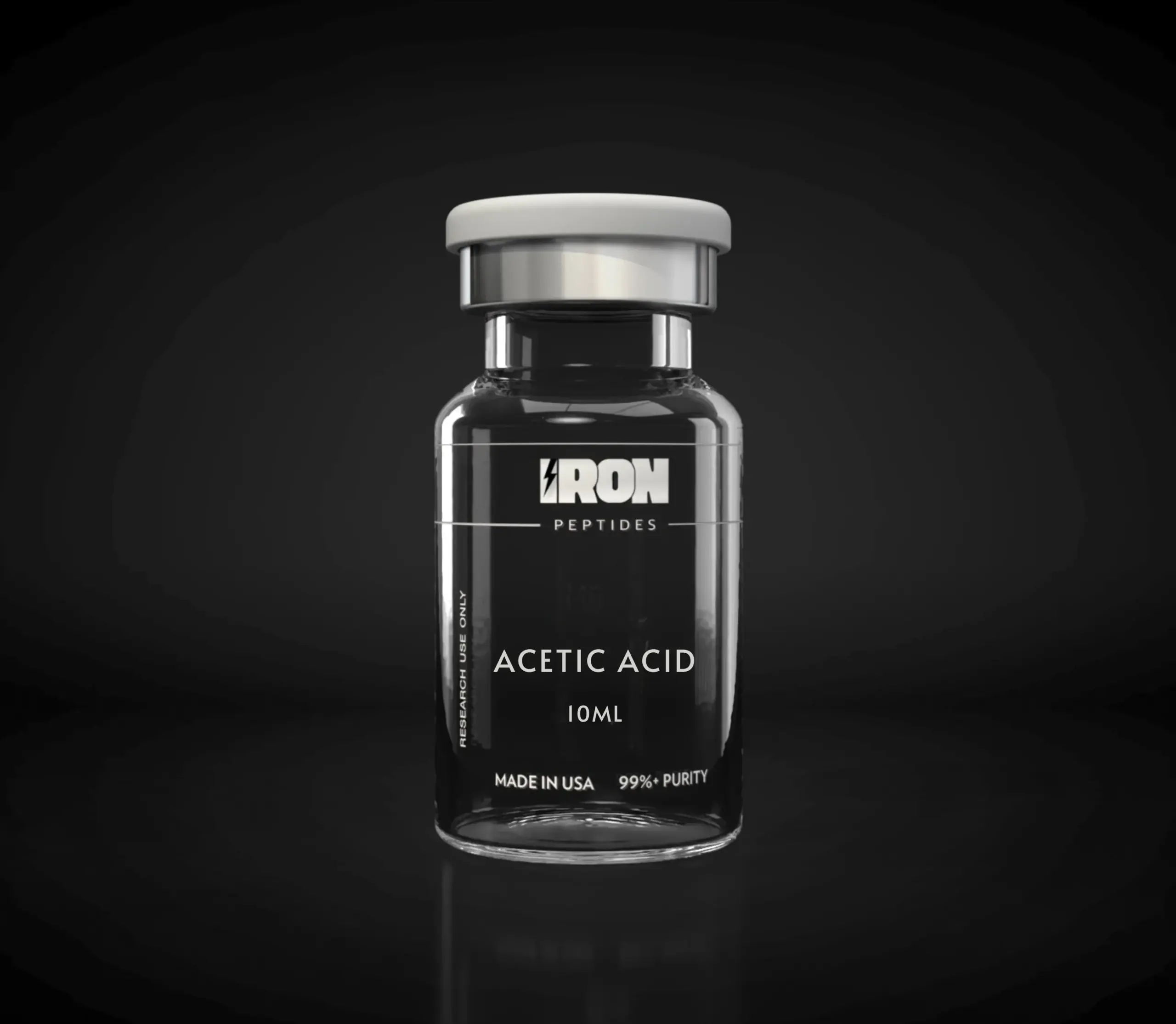
Acetic Acid Solution

$10.99
🔥 Exclusive Crypto Offer
Get an INSTANT 15% DISCOUNT when you pay with Bitcoin, Ethereum, Dogecoin, Bitcoin Cash, XRP, Solana, or USDT.
bc1qd8hvazqcd69ufelrxqs6ssyz9lfgm4fv4dkc6v
⚡ Don't have crypto? Buy it here in 5 minutes with easy guidance.
What is Acetic Acid Solution?
Acetic Acid (CH₃COOH) is a simple organic carboxylic acid and the primary component responsible for the acidity of vinegar. In laboratory and industrial settings, acetic acid is widely used as a reagent, solvent, buffer component, and pH modifier.
In scientific research, acetic acid is applied in:
-
Chemical synthesis and organic reactions
-
Preparation of buffers and solutions
-
Protein precipitation and fixation
-
Microbiological, histological, and biochemical studies
-
Analytical chemistry and titrations
The Acetic Acid 10 mL product typically contains glacial acetic acid diluted to a specific research-grade concentration, making it suitable for controlled laboratory use.
Chemical Structure of Acetic Acid Solution
-
Chemical Formula: C₂H₄O₂
-
Molecular Weight: 60.05 g/mol
-
Structure: CH₃–COOH
Acetic acid has a simple carboxyl functional group attached to a methyl group.
Its structure enables:
-
Weak acidic behavior (pKa ≈ 4.76)
-
Strong solvating ability
-
High miscibility with water and many organic solvents
At high concentrations (glacial acetic acid), the compound is a corrosive, hygroscopic liquid with a sharp, distinctive odor.
What Are the Effects of Acetic Acid Solution?
Acetic acid is used across many research fields due to its predictable chemical behavior and compatibility with biological systems.
• Laboratory Reagent & Solvent
Used in organic synthesis, chromatography, and chemical reactions requiring a weak organic acid.
• Biological & Histological Applications
-
Protein precipitation
-
Cell fixation
-
Tissue clearing
-
DNA extraction protocols
• Buffer and pH Control
Frequently used to prepare acetate buffers for biochemical assays.
• Antimicrobial Effects (Research Use)
Demonstrates antibacterial and antifungal activity in vitro, making it useful in studies involving microbial growth inhibition.
• Analytical Chemistry
Used in titrations, spectroscopy, and reagent preparation.
Research-Use Disclaimer
Acetic Acid (10 mL) is provided strictly for laboratory, analytical, and scientific research purposes.
It is not intended for human or veterinary use, medical application, or ingestion.
Handle with appropriate PPE due to its corrosive nature.
Related products
Vial
Vial
Vial
Vial
Vial
Vial
Vial