
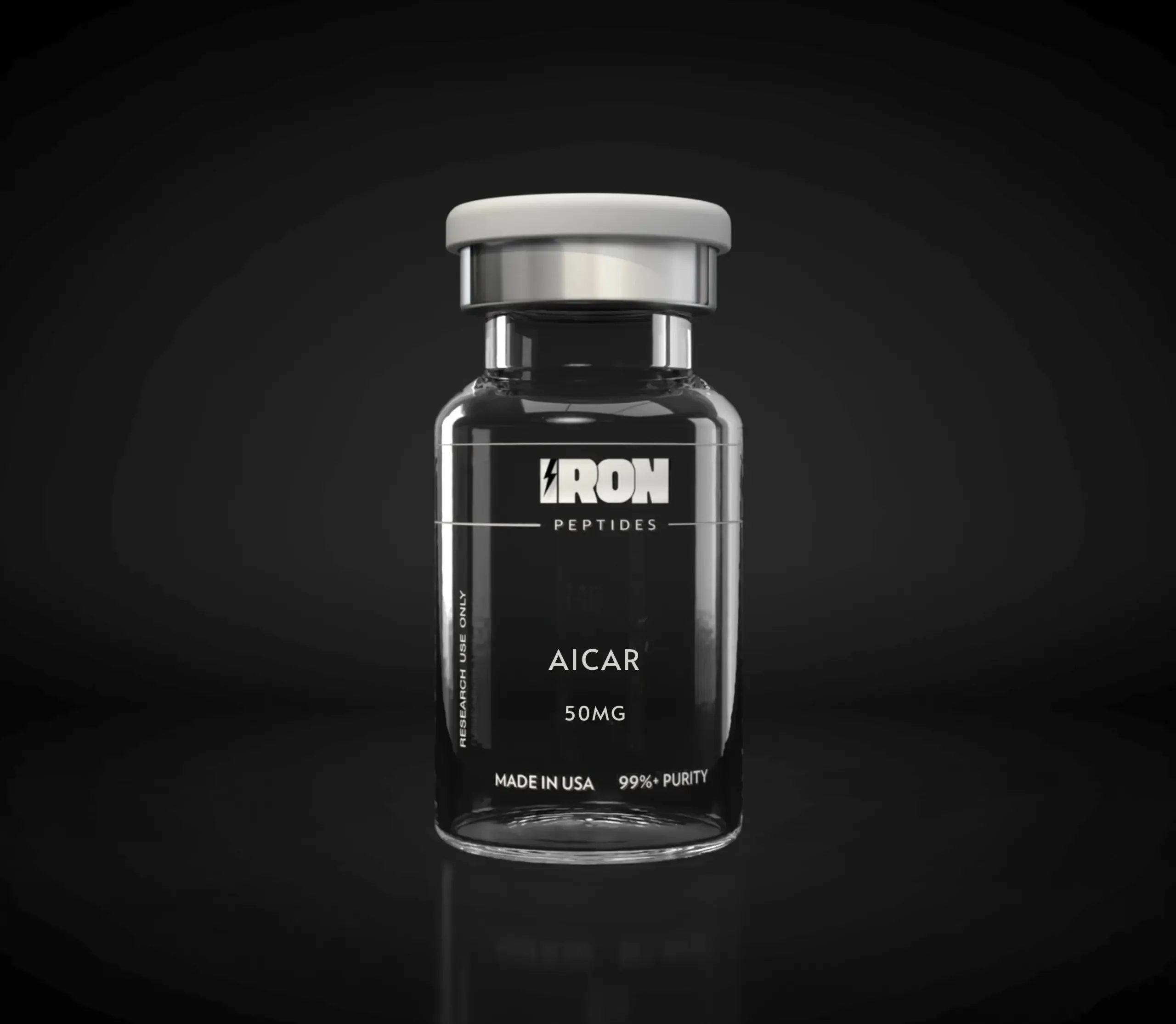


What is AICAR 50MG?
AICAR (5-Aminoimidazole-4-carboxamide ribonucleotide), also known as AICA ribonucleotide, is a small-molecule research compound widely used in laboratory studies to investigate cellular energy sensing and metabolic regulation.
AICAR functions as an AMP analog, meaning it mimics adenosine monophosphate (AMP) inside cells. This allows it to activate AMP-activated protein kinase (AMPK), a central metabolic regulator that controls energy balance at both the cellular and whole-organism level.
Because of this mechanism, AICAR is extensively studied in research areas such as:
-
Cellular energy homeostasis
-
Metabolic signaling pathways
-
Mitochondrial biogenesis
-
Glucose and lipid metabolism
-
Stress-response signaling
AICAR is supplied strictly for laboratory and preclinical research and is not intended for human or veterinary use.
Chemical Structure of AICAR 50MG
AICAR is a nucleoside monophosphate structurally related to endogenous purine metabolism intermediates.
Chemical name:
5-Aminoimidazole-4-carboxamide ribonucleotide
Molecular formula:
C₉H₁₅N₄O₈P
Molecular weight:
338.21 g/mol
CAS number:
3031-94-5
PubChem CID:
65110
Synonyms:
-
AICA ribonucleotide
-
Z-nucleotide
Within cells, AICAR is phosphorylated to ZMP, which closely resembles AMP and directly activates AMPK without requiring changes in cellular ATP levels.
What Are the Effects of AICAR 50MG?
(Preclinical & Laboratory Research Findings Only)
AMPK Activation & Energy Sensing
AICAR is best known for its ability to activate AMPK, a master regulator of cellular energy balance. Activation of AMPK shifts cellular metabolism toward energy-producing processes while reducing energy-consuming pathways, making AICAR a foundational tool for studying metabolic regulation.
Mitochondrial Biogenesis Research
In experimental models, AICAR has been shown to activate AMPK–PGC-1α signaling, a pathway involved in mitochondrial formation and function. This makes it valuable in studies exploring mitochondrial density, oxidative capacity, and cellular endurance mechanisms.
Glucose & Lipid Metabolism Studies
AICAR is frequently used in laboratory systems to examine:
-
Glucose uptake and transport
-
Fatty acid oxidation pathways
-
Insulin-independent metabolic signaling
These properties make it useful in metabolic research involving muscle cells, liver cells, and other energy-demanding tissues.
Inflammation & Stress-Response Research
AMPK signaling intersects with inflammatory and stress-response pathways. In preclinical studies, AICAR is used to explore how energy-sensing mechanisms influence cytokine signaling, oxidative stress responses, and cellular survival under metabolic strain.
Cell Cycle & Survival Pathways
Research has shown that AMPK activation via AICAR can influence downstream pathways related to:
-
Cell-cycle regulation
-
Apoptosis signaling
-
MAPK and p38-related stress pathways
This makes AICAR a useful compound in broader cellular signaling and systems biology studies.
Related products

Vial

Vial

Vial


Vial

Vial

Vial

Vial