
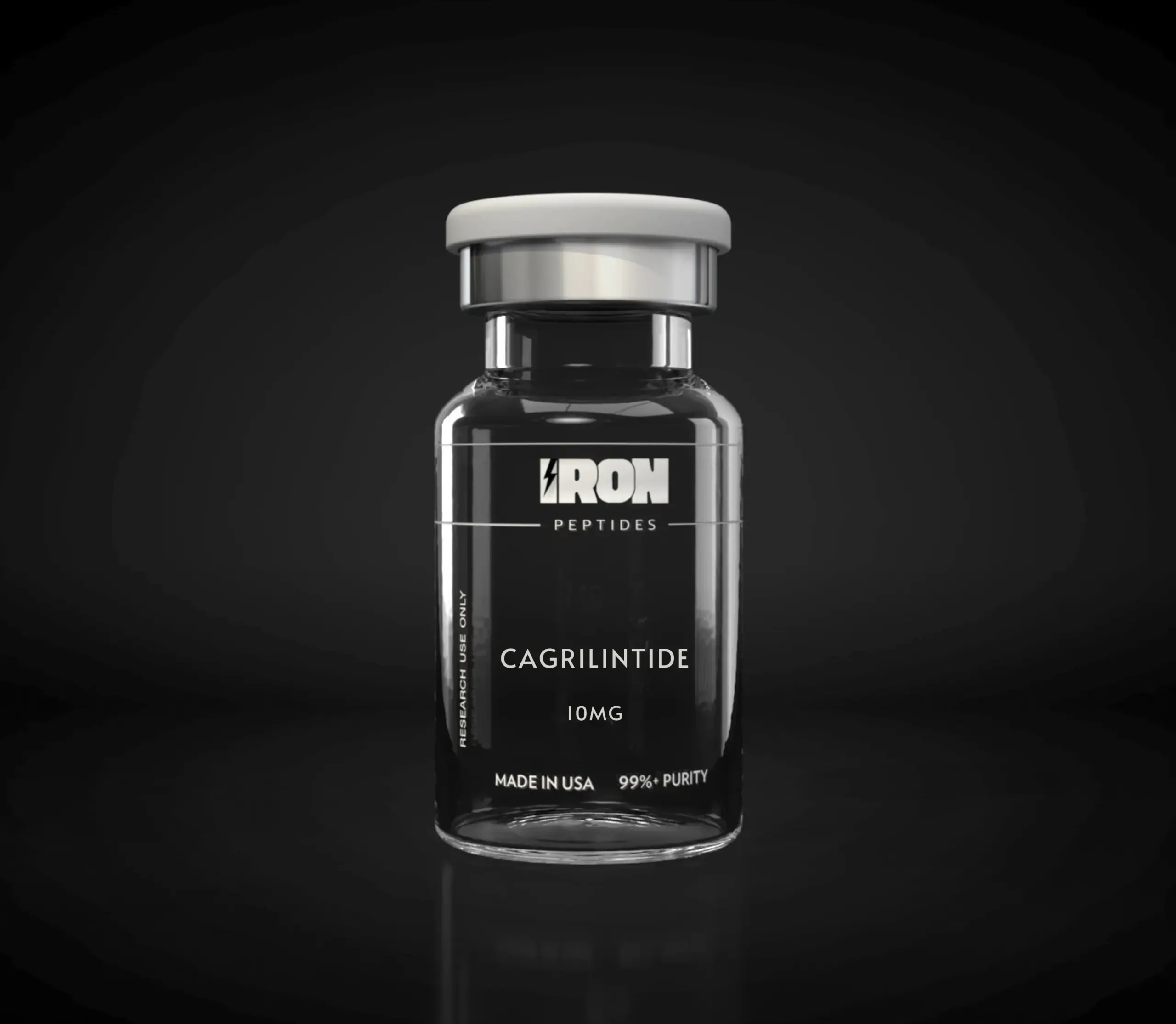


What is Cagrilintide (10MG)?
Cagrilintide is a long-acting synthetic peptide analogue of human amylin, engineered for dual activation of amylin and calcitonin receptors (DACRA). It is designed with specific amino acid substitutions and N-terminal acylation (a fatty acid side chain) to enhance metabolic stability and prolong its half-life.
In research models, Cagrilintide is studied for its role in appetite regulation, gastric emptying, and energy balance, acting primarily through central and peripheral pathways involved in metabolic control. It remains strictly a research compound, not intended for therapeutic or dietary use.
Chemical Structure of Cagrilintide (10MG)
-
Sequence: XKCNTATCATQRLAEFLRHSSNNFGPILPPTNVGSNTP
-
Molecular Formula: C₁₉₄H₃₁₂N₅₄O₅₉S₂
-
Molecular Weight: 4,409.01 g/mol
-
CAS Number: 1415456-99-3
-
Synonyms: AM833, AT42613
-
Structure Features: The peptide is acylated with a C20 di-acid fatty chain, which improves albumin binding and extends its biological half-life to approximately 160–190 hours in test systems.
-
Form: White lyophilized powder, soluble in aqueous buffers.
What Are the Effects of Cagrilintide (10MG)?
Appetite Regulation and Gastric Emptying — Studies indicate Cagrilintide activates amylin receptors in the brainstem regions (e.g., area postrema and nucleus tractus solitarius), leading to reduced food intake and delayed gastric emptying.
Energy and Weight Research Models — In experimental settings, Cagrilintide has been shown to enhance energy balance and contribute to weight reduction when administered alone or in combination with GLP-1 receptor agonists. Combination studies (e.g., with semaglutide) demonstrated synergistic effects in reducing body weight and improving metabolic parameters in research animals.
Metabolic & Glycemic Modulation — Data from preclinical and early human research demonstrate reductions in glucagon levels, modest improvements in fasting glucose, and better insulin sensitivity in metabolic studies.
Pharmacokinetic Advantages — Due to its acylated structure, Cagrilintide exhibits a long elimination half-life (~160–195 hours), supporting sustained receptor engagement and stable activity with once-weekly administration schedules in experimental contexts.
Safety Observations — Controlled research trials report gastrointestinal events (e.g., transient nausea or fullness) as the most common findings, similar to other amylin analogs. No endocrine-related toxicities have been documented under study conditions.
Product & Quality Information
-
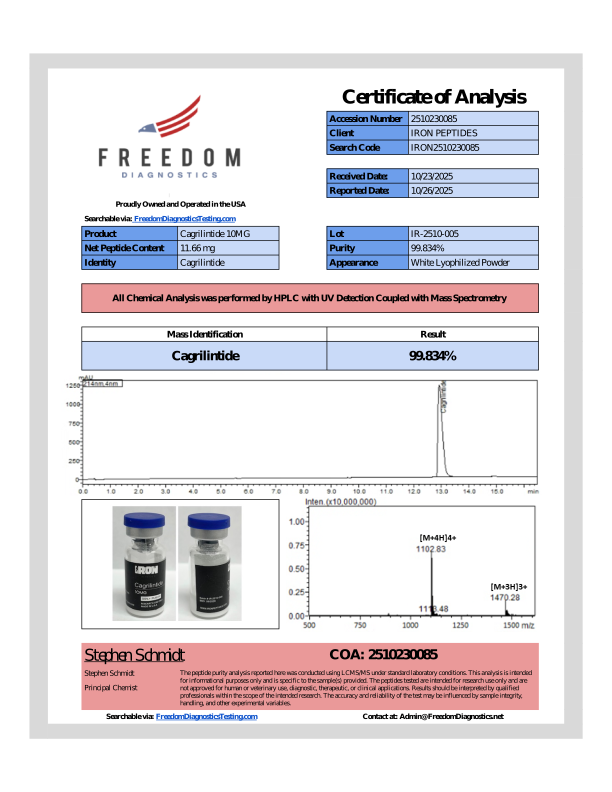
Purity: ≥99% (HPLC verified)
-
Solubility: Water and aqueous buffers
-
Storage: Store at –20°C, sealed and protected from light and moisture
-
Shelf Life: 36 months when stored properly
-
Manufacturing: USA-made, GMP-compliant, third-party tested for sterility and purity
-
Intended Use: In vitro and laboratory research only — not for human use
Legal Disclaimer
This compound is sold exclusively for research purposes. It is not approved for human or veterinary consumption, medical use, or as a dietary supplement. Handle only by qualified individuals with appropriate laboratory training. Keep out of reach of children. The supplier guarantees the purity and identity of the material only.
Related products
Vial
Vial
Vial
Vial
Vial
Vial
Vial
Vial