
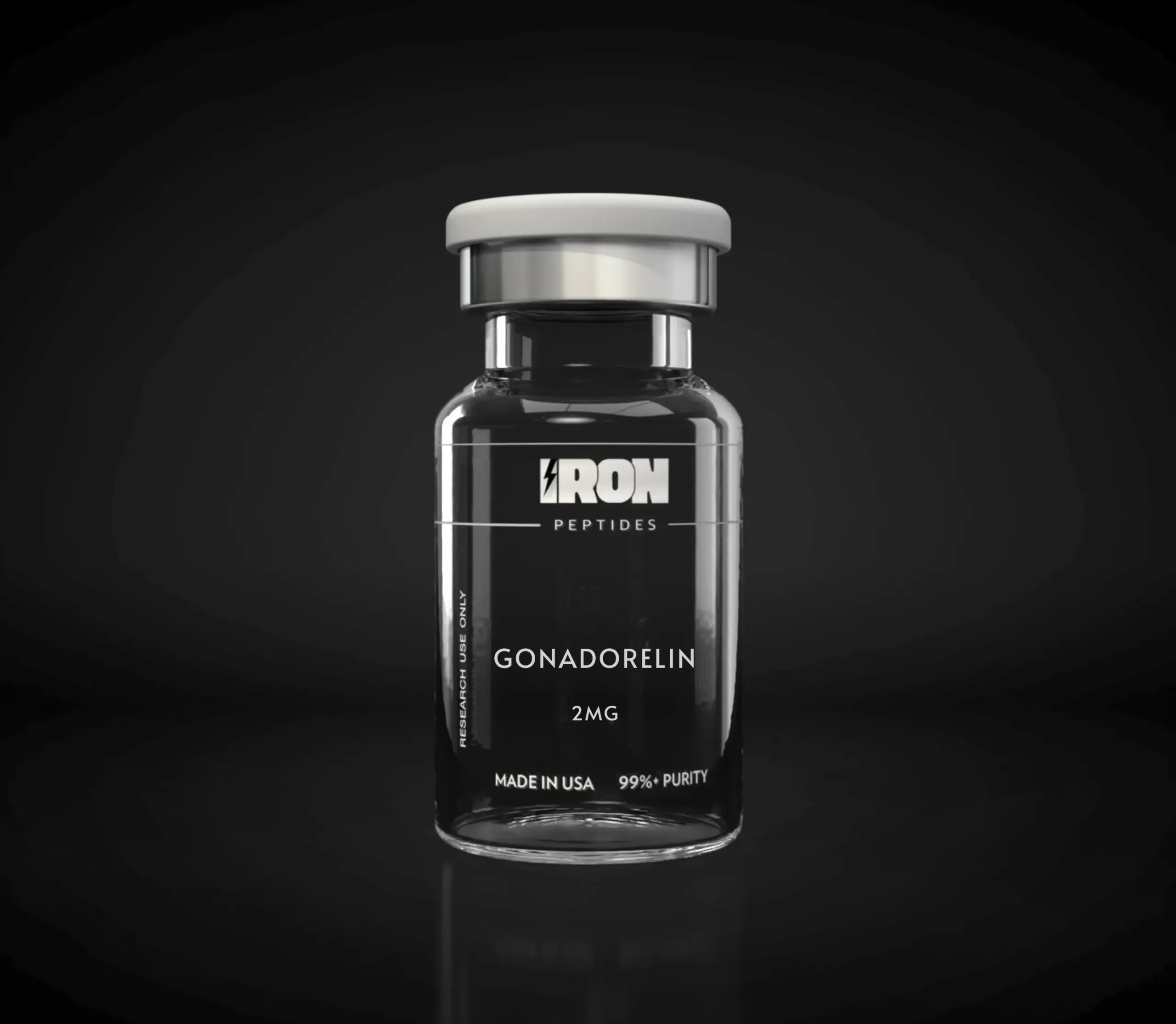
Gonadorelin

$89.99
🔥 Exclusive Crypto Offer
Get an INSTANT 15% DISCOUNT when you pay with Bitcoin, Ethereum, Dogecoin, Bitcoin Cash, XRP, Solana, or USDT.
bc1qd8hvazqcd69ufelrxqs6ssyz9lfgm4fv4dkc6v
⚡ Don't have crypto? Buy it here in 5 minutes with easy guidance.
What is Gonadorelin?
Gonadorelin is a synthetic decapeptide that is chemically identical to the natural gonadotropin-releasing hormone (GnRH) produced by the hypothalamus. It plays a key role in regulating the hypothalamic-pituitary-gonadal (HPG) axis by stimulating the anterior pituitary gland to secrete luteinizing hormone (LH) and follicle-stimulating hormone (FSH). In research applications, Gonadorelin is widely used to study reproductive hormone regulation, neuroendocrine signaling, and feedback mechanisms within the endocrine system.
Chemical Structure of Gonadorelin
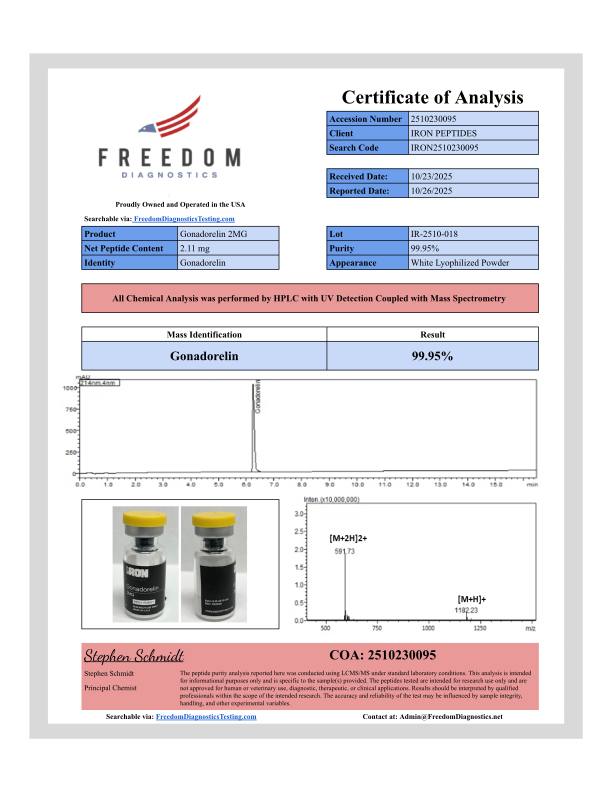
The amino acid sequence of Gonadorelin is pGlu–His–Trp–Ser–Tyr–Gly–Leu–Arg–Pro–Gly–NH₂, with a molecular formula of C₅₅H₇₅N₁₇O₁₃ and a molecular weight of approximately 1,182.3 Da.
It features a pyroglutamate (pGlu) at the N-terminus and an amidated C-terminus, which provide enhanced structural stability. Due to its short biological half-life (approximately 10–40 minutes in experimental models), Gonadorelin is often administered in pulsatile patterns to replicate natural GnRH secretion dynamics.
What Are the Effects of Gonadorelin?
In laboratory studies, Gonadorelin has been shown to:
-
Stimulate LH and FSH release by activating GnRH receptors in the pituitary.
-
Model pulsatile GnRH secretion, enabling controlled studies of reproductive hormone cycles.
-
Support research on ovulation, testosterone regulation, and fertility mechanisms.
-
Facilitate studies on endocrine feedback loops involving sex steroids, inhibin, and hypothalamic signaling.
-
Assist in cancer research, particularly in hormone-sensitive prostate and breast cell line studies where GnRH analogues are being evaluated for potential antiproliferative effects.
Gonadorelin is supplied for laboratory research use only and is not approved for human or veterinary consumption.
Related products
Vial
Vial
Vial
Vial
Vial
Vial