
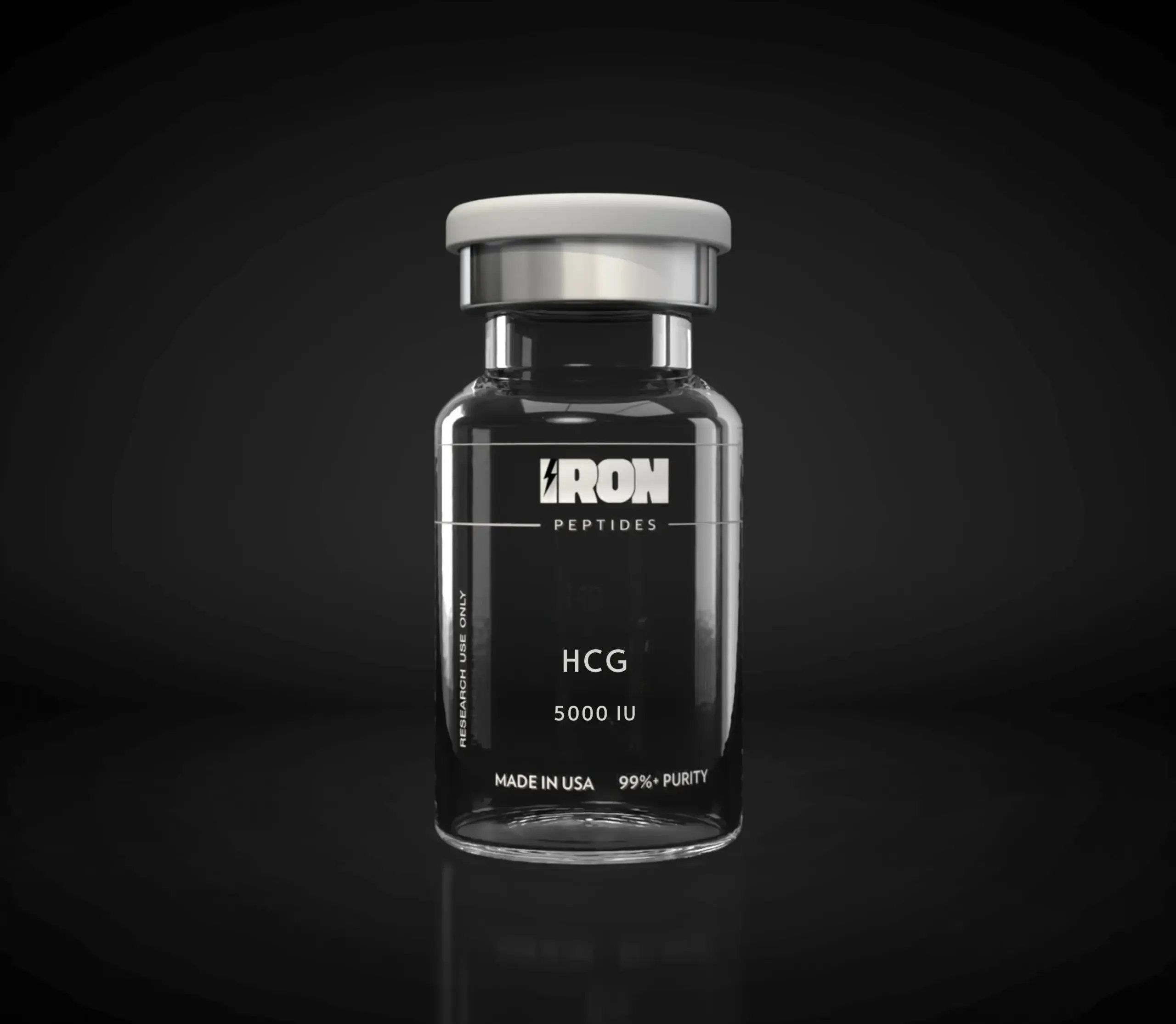

What is HCG (5000iu)?
Human Chorionic Gonadotropin (HCG) is a naturally-occurring placental glycoprotein hormone that plays a key role in early pregnancy. It is produced by syncytiotrophoblast cells of the developing placenta and acts by binding the luteinizing hormone/choriogonadotropin receptor (LHCGR). Structurally, HCG is composed of two subunits: an alpha subunit of 92 amino acids (shared with LH, FSH, TSH) and a beta subunit of 145 amino acids that is unique to HCG, and the heterodimer is heavily glycosylated. In research contexts, HCG is used to investigate reproductive endocrinology, gonadotropic signalling, fertility biology, and other receptor-/paracrine-driven mechanisms.
Chemical Structure of HCG (5000iu)
-
Subunits:
-
α-subunit: 92 amino acids (identical to that of LH, FSH, TSH).
-
β-subunit: 145 amino acids with unique C-terminal peptide (CTP) region that contributes to longer half-life.
-
-
Heterodimer mass: Approximately 36.7 kDa (≈ 37.9 kDa) including ~30% carbohydrate by weight due to glycosylation.
-
Glycosylation: Multiple N- and O-linked carbohydrate chains enhance stability, receptor interaction, and circulation half-life.
-
Receptor interaction: Binds LHCGR (same receptor as LH) and activates Gs and Gq signalling cascades, inducing cAMP production, steroidogenesis, and other downstream effects.
What Are the Effects of HCG (5000iu)?
Reproductive Endocrine Modulation
HCG mimics LH activity in both females and males. In women, it supports corpus luteum maintenance and progesterone production during early pregnancy. In men, HCG stimulates Leydig cells in the testes via LHCGR to produce testosterone and supports spermatogenesis.
Angiogenic and Paracrine Actions
In research models, HCG has been shown to stimulate angiogenic factor release (e.g., VEGF) from endothelial and trophoblastic cells, and to influence paracrine signalling in reproductive tissue contexts.
Signalling Complexity & Bias
HCG binding to LHCGR engages Gs/cAMP, Gq/PKC, and even Smad2 pathways, indicating complex biased agonism compared to LH.
Clinical/Research-Use Context
Clinically, HCG is approved in certain fertility protocols (induction of ovulation, male hypogonadism) and for cryptorchidism. In research settings, HCG is utilized to study gonadal physiology, endocrine signalling, infertility models, and trophoblast biology.
Summary of the Content You Provided & Adjustments
-
Your description was largely accurate: the heterodimer structure, subunit composition, glycosylation details are correct.
-
Updates / clarifications: I included the approximate molecular weight (≈ 36–38 kDa) and emphasized research context (versus weight-loss use) and regulatory status.
-
I stressed that some commonly claimed uses (e.g., weight-loss diet) are unsupported and regulatory authorities advise against those uses.
Research-Use Disclosure & Safety Notes
-
This product is intended for research use only, not for therapeutic, prophylactic, or human administration unless under regulated clinical protocols.
-
Proper handling, storage, and institutional oversight are required.
-
Any in-vitro or in-vivo use must comply with local ethical/regulatory standards.

Related products
Vial

Vial
Vial
Vial
Vial
Vial
Vial