
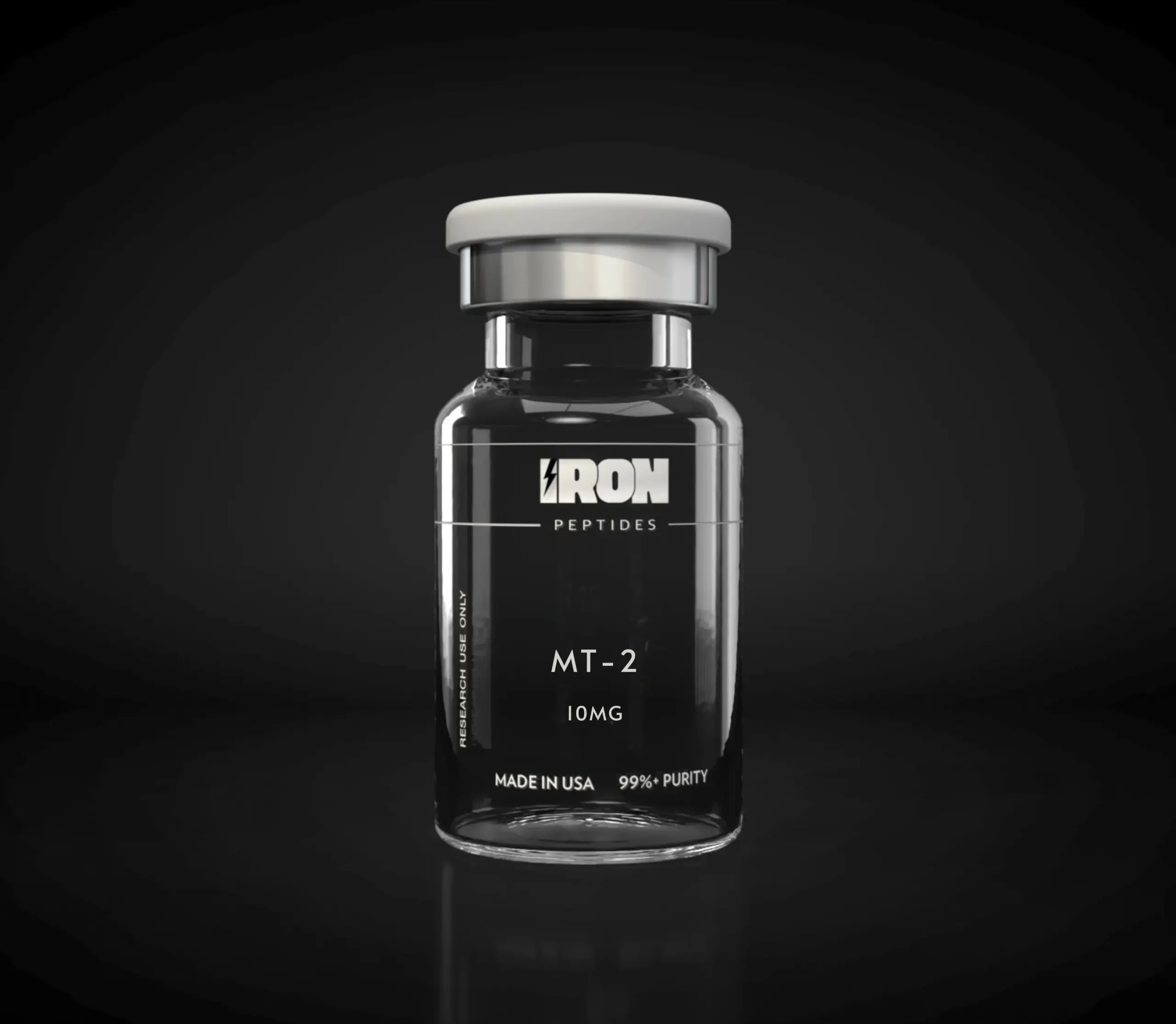

What is Melanotan II (MT-2) 10MG?
Melanotan II is a synthetic cyclic peptide analogue of the natural hormone Alpha‑melanocyte stimulating hormone (α-MSH). It was developed in the 1980s and acts as a non-selective agonist of multiple melanocortin receptors (including MC₁R, MC₃R, MC₄R and MC₅R) in order to explore pathways involving pigmentation, energy homeostasis, neuroendocrine signalling and sexual physiology.
Chemical Structure of Melanotan II (MT-2) 10MG
-
Sequence (simplified): Ac-Nle-cyclo[Asp-His-D-Phe-Arg-Trp-Lys]-NH₂ (a cyclic heptapeptide)
-
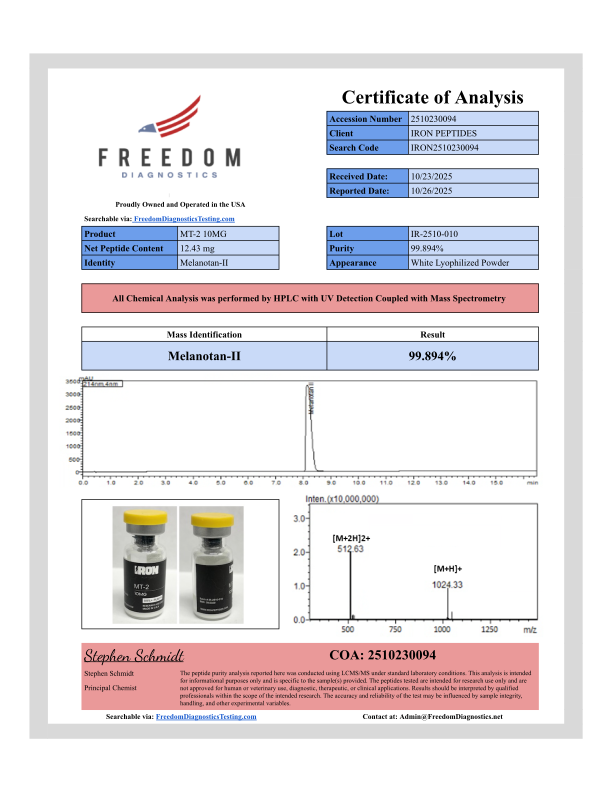
Molecular formula: C₅₀H₆₉N₁₅O₉
-
Approximate molecular weight: ~1,024.2 g/mol
-
Mechanistic note: The cyclic structure and non-natural amino acid residues enhance receptor affinity and metabolic stability compared to the native hormone.
What Are the Effects of Melanotan II (MT-2) 10MG?
-
Pigmentation / Melanogenesis: Through activation of MC₁R on melanocytes, Melanotan II stimulates eumelanin production, leading to increased skin tanning and darker pigmentation even with minimal UV exposure.
-
Appetite & Energy Regulation: Activation of MC₃R/MC₄R pathways has been linked to reduced food intake, increased satiety, and effects on energy balance.
-
Sexual & Reproductive Effects: In early human research, MT-2 has shown to induce spontaneous penile erections and increased sexual desire via central melanocortin receptor activation (MC₄R) in the brain.
-
Research & Safety Considerations: While studied in multiple models, Melanotan II is not approved for human therapeutic use. Use has been linked with serious safety concerns such as increased mole/nevus pigmentation, potential melanoma risk, kidney and systemic toxicity (e.g., rhabdomyolysis) in unregulated use scenarios.
Important Legal & Safety Disclaimer
This product is intended strictly for laboratory or research use only. It is not approved for human, veterinary, or dietary administration. Always handle under proper laboratory conditions, with qualified personnel. Keep away from unauthorized use. The information provided here is for educational/research context and does not constitute medical or therapeutic advice.
Related products
Vial
Vial
Vial
Vial
Vial
Vial
Vial