What is PT-141 Nasal Spray?
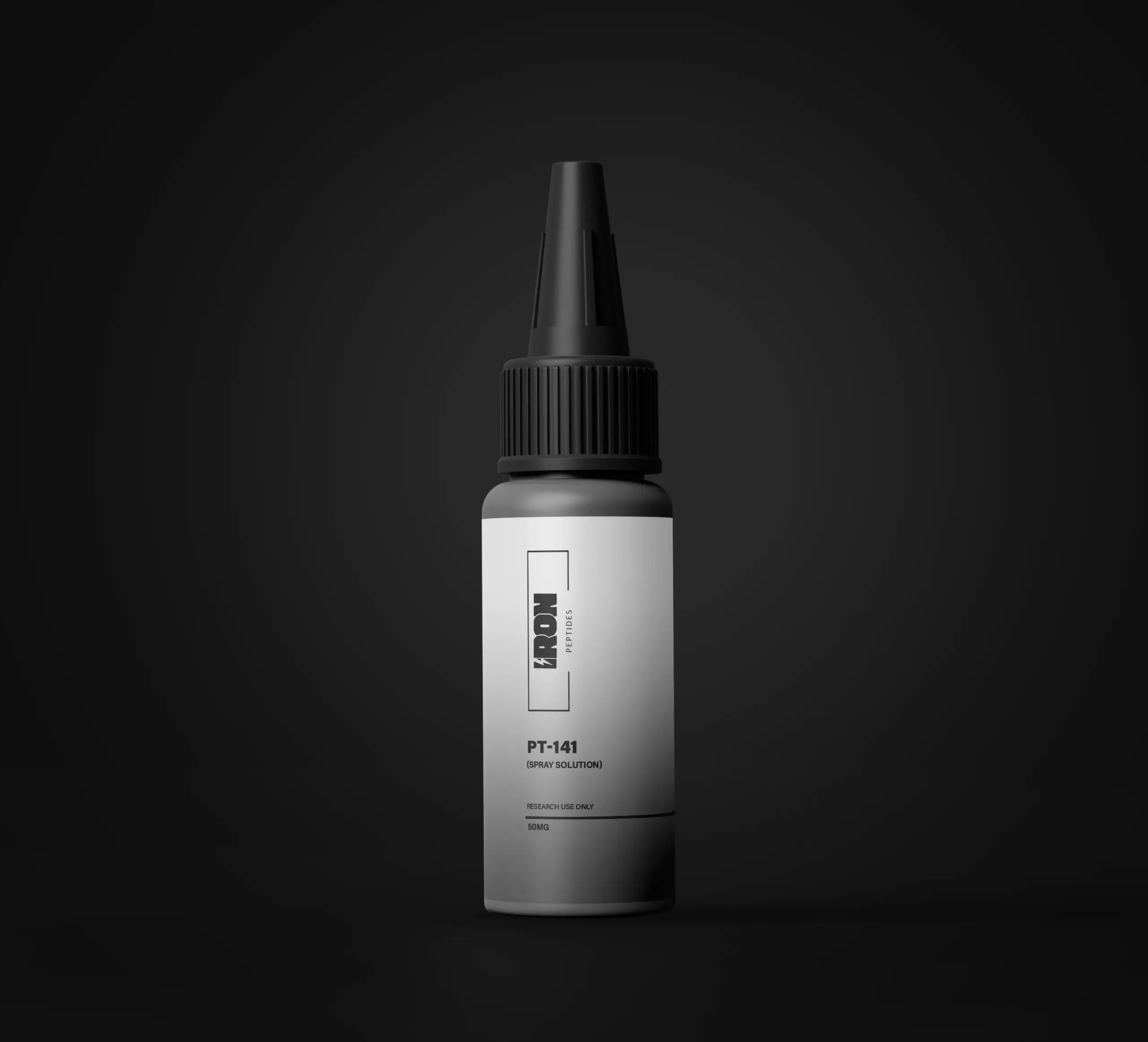
PT‑141 nasal spray, also known as Bremelanotide, is a synthetic peptide derived from melanotan II, designed for research into sexual health and neurological modulation. Unlike conventional treatments for sexual dysfunction that act on the vascular system, PT‑141 works by activating melanocortin receptors in the brain, directly influencing arousal through the central nervous system.
Originally studied for skin pigmentation effects, PT‑141 gained attention when researchers observed its pro-sexual effects, making it a candidate for investigating treatments for erectile dysfunction (ED) and female sexual dysfunction (FSD). PT‑141 (HA) Spray is a nasal formulation that allows for non-invasive delivery in research settings.
Chemical Structure of PT-141 Nasal Spray
-
Peptide Name: Bremelanotide (PT‑141)
-
Sequence: Ac‑Nle‑c[Asp‑His‑D‑Phe‑Arg‑Trp‑Lys]‑OH
-
Molecular Formula: C₅₀H₆₈N₁₄O₁₀
-
Molecular Weight: ~1025.2 g/mol
-
Form: Nasal spray with Hyaluronic Acid (HA) as a carrier agent
The presence of Hyaluronic Acid (HA) in the formulation improves mucosal absorption, enhancing bioavailability in nasal delivery research.
What Are the Effects of PT-141 Nasal Spray?
PT‑141 (Bremelanotide) has been widely studied for its neurological impact on sexual motivation and arousal, rather than physical stimulation alone. Its effects have been observed in both men and women through various mechanisms:
In Men (Erectile Dysfunction)
-
Stimulates erections via the hypothalamus without relying on blood vessel dilation
-
May help those who are non-responsive to PDE5 inhibitors (e.g., sildenafil)
-
Works on psychological and neurological causes of ED
In Women (Sexual Arousal and Desire Disorders)
-
Increases sexual desire and responsiveness
-
Does not rely on hormonal modulation
-
Investigated as a non-hormonal treatment for FSAD and HSDD
General Libido Enhancement
-
Activates melanocortin pathways linked to sexual behavior
-
Fast onset of action, with effects noted within hours
-
May benefit individuals experiencing low libido due to psychological factors, stress, or age-related changes
Related products
Nasal Spray
Nasal Spray
Nasal Spray
Nasal Spray
Nasal Spray
Nasal Spray