



What is SEMA GLP-1?
GLP-1 is a 30-amino-acid peptide extensively studied in metabolic and cellular signaling research. It plays a key role in glucose regulation pathways, appetite signaling mechanisms, and systemic metabolic processes.
Initially explored in diabetes and endocrinology research models, GLP-1 has since become a focus of investigation in adipose signaling, longevity pathways, and multi-organ cellular protection studies.
Key Research Areas
-
Appetite Signaling Pathways – Studied for its role in gastric emptying dynamics and hunger-related neural signaling
-
Glucose & Insulin Signaling – Investigated for its involvement in insulin sensitivity and glycemic regulation mechanisms
-
Cardiac, Hepatic & Neural Pathways – Examined for potential roles in inflammation modulation and tissue integrity signaling
-
Neuroprotective Research – Explored in preclinical models for associations with cognitive and neuronal resilience
One peptide.
Multiple biological pathways.
Advanced metabolic research.
Chemical Structure of SEMA GLP-1
GLP-1 is a glucagon-like peptide-1 analog composed of a precisely engineered amino-acid sequence, designed for investigation within metabolic and endocrine signaling research.
Amino Acid Sequence
HXEGTFTSDVSSYLEGQAAK-OH · steric diacid · EFIAWLVRGRG
This molecular structure is studied for its interaction with GLP-1 receptor pathways, including roles in insulin and glucagon signaling mechanisms and gastric motility–related signaling cascades, as observed in preclinical and laboratory models.
The peptide’s design enables controlled exploration of glucose regulation pathways, appetite-related signaling networks, and metabolic system modulation under experimental conditions.
Engineered for precision.
Defined by structure.
Driven by scientific research.
What Are the Effects of SEMA GLP-1?
Appetite-Related Signaling
Studied for its involvement in gastric motility pathways and satiety-associated neural signaling, with research examining effects on digestive timing and appetite-related signaling cascades in experimental models.
Glucose Regulation Pathways
Investigated for its role in glucose-dependent insulin signaling and glucagon modulation mechanisms, as observed in laboratory and preclinical research settings.
Cardiometabolic Signaling
Explored in research for associations with cardiac signaling pathways, vascular function markers, and inflammation-related mechanisms relevant to long-term metabolic studies.
Glycemic Stability Mechanisms
Examined for its influence on glucose fluctuation dynamics and metabolic balance signaling, with studies focusing on system-level glucose regulation pathways rather than outcomes.
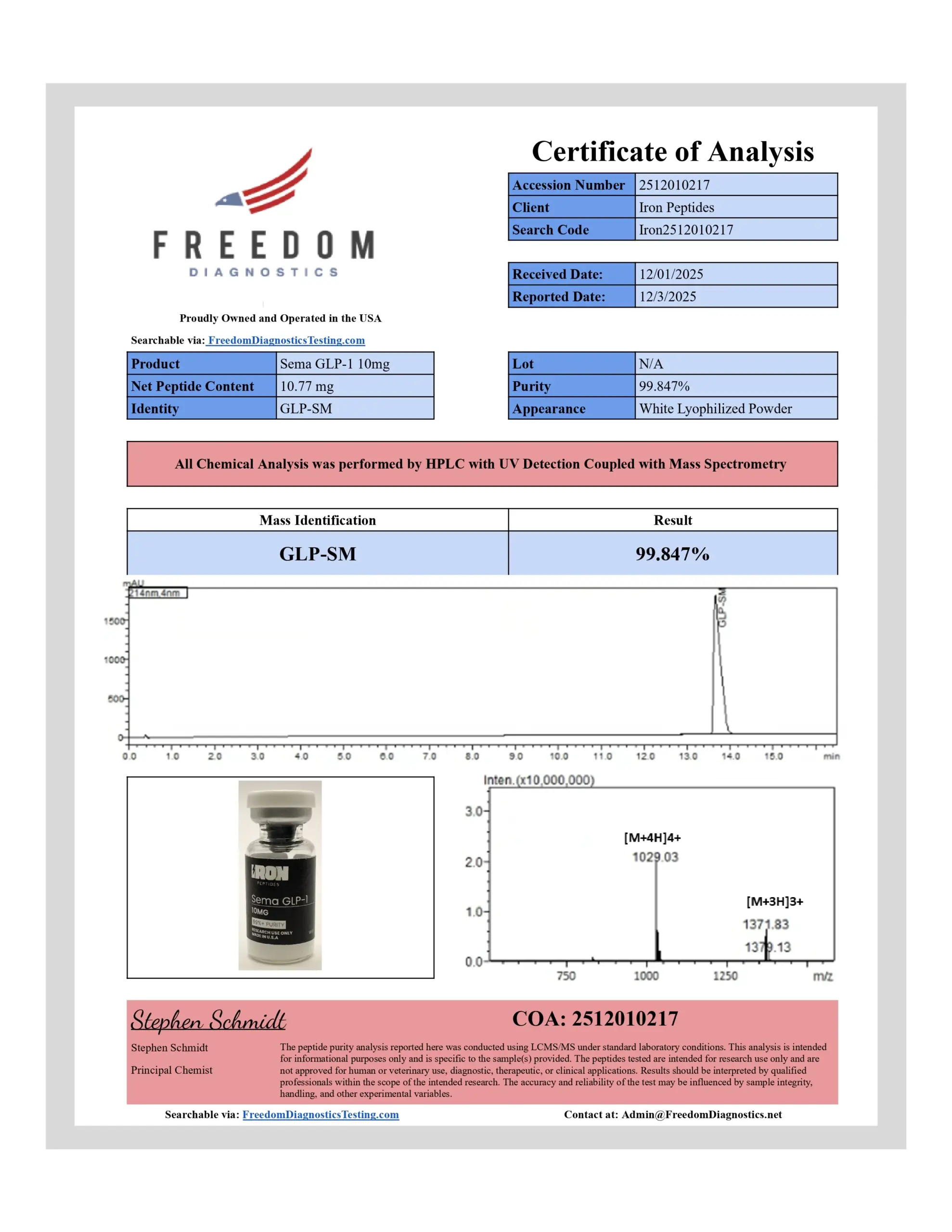
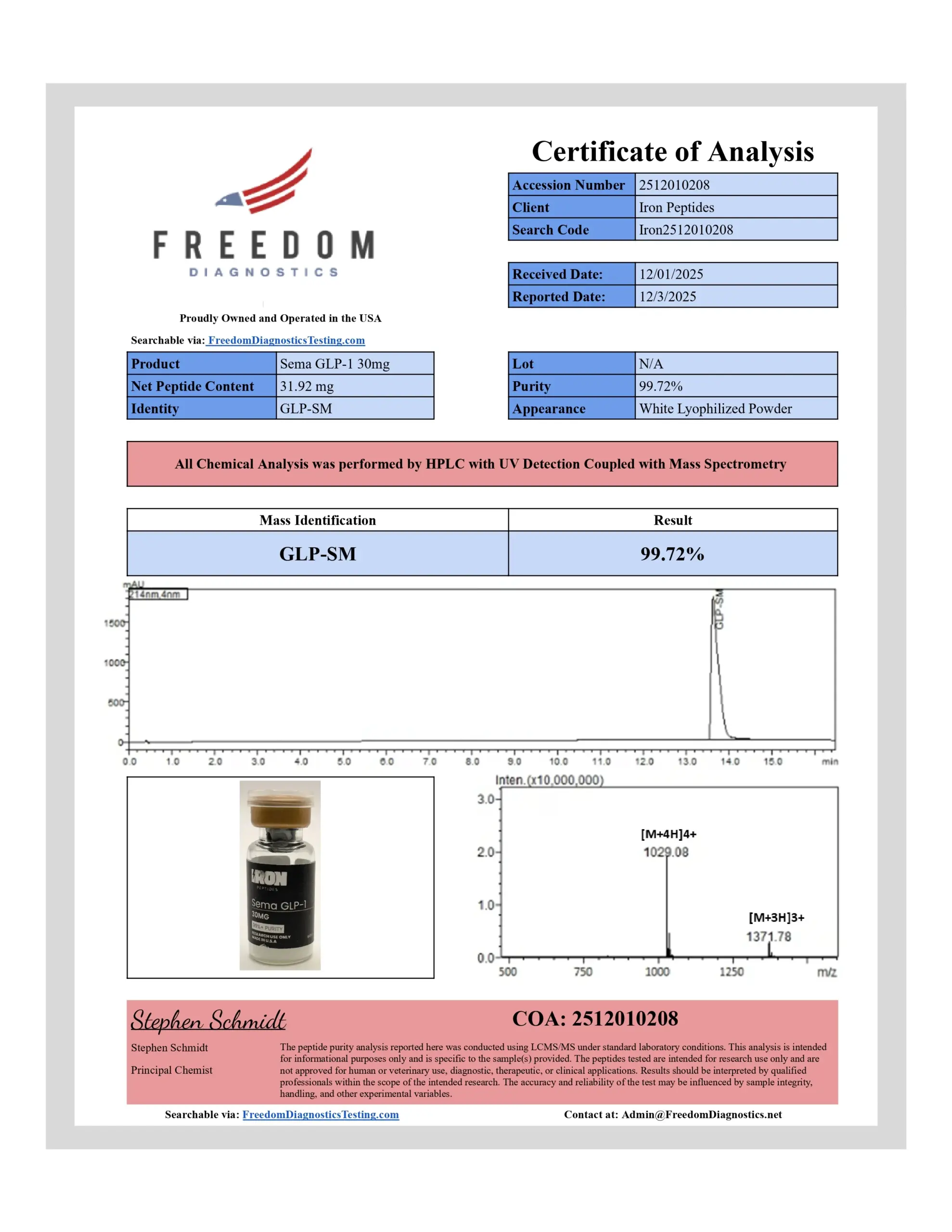
Related products

Vial

Vial

Vial

Vial

Vial

Vial

Vial

Vial