
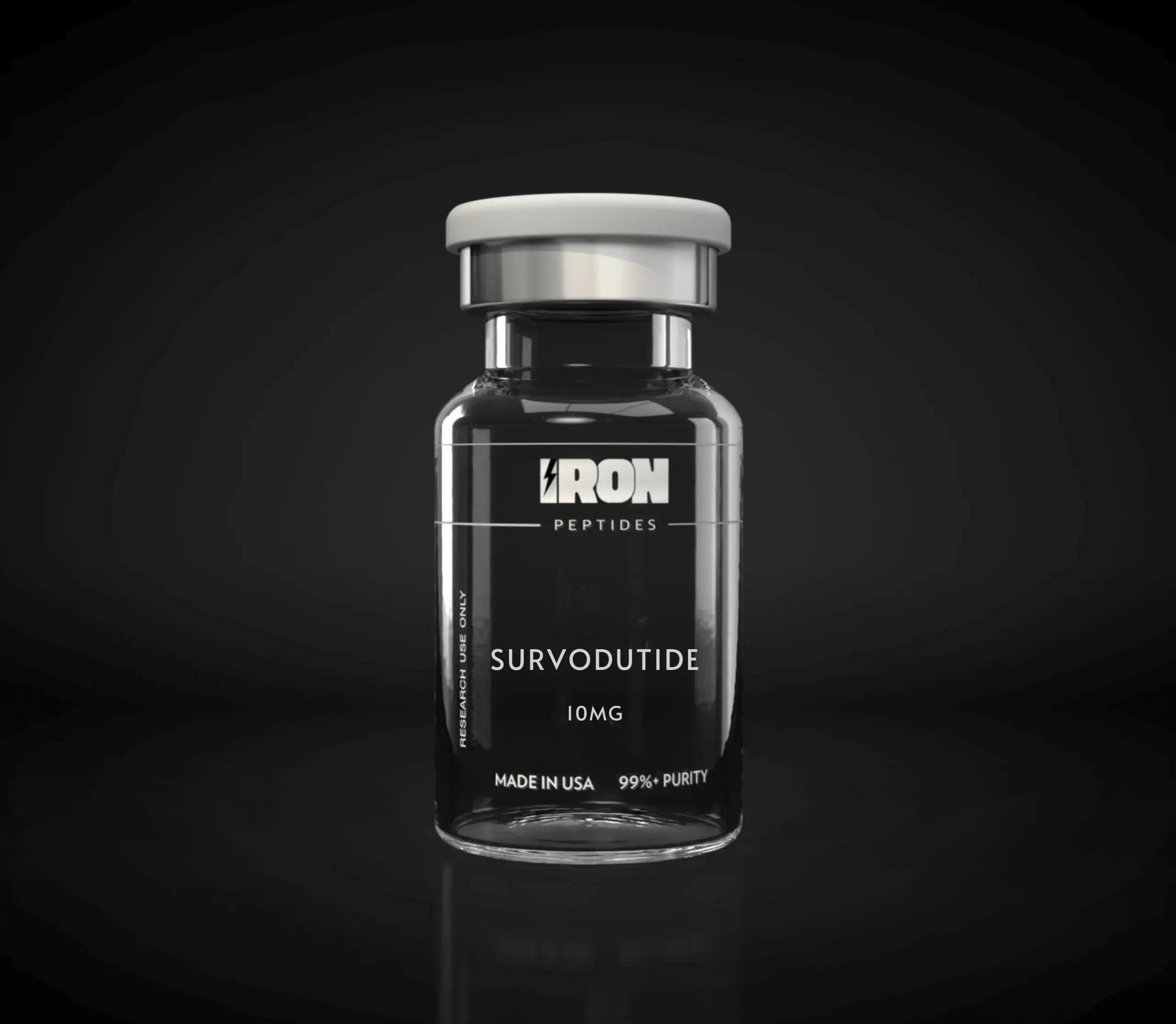
Survodutide 10MG

$149.99
🔥 Exclusive Crypto Offer
Get an INSTANT 15% DISCOUNT when you pay with Bitcoin, Ethereum, Dogecoin, Bitcoin Cash, XRP, Solana, or USDT.
bc1qd8hvazqcd69ufelrxqs6ssyz9lfgm4fv4dkc6v
⚡ Don't have crypto? Buy it here in 5 minutes with easy guidance.
What is Survodutide 10MG?
Survodutide (also known by its research designation BI-456906) is a synthetic, long-acting investigational peptide designed as a dual agonist of the GLP-1 receptor (GLP-1R) and the glucagon receptor (GCGR). It is engineered from the glucagon peptide backbone with structural modifications that enhance stability and receptor activity. Survodutide’s dual receptor activation allows simultaneous engagement of pathways that:
-
reduce appetite and slow gastric emptying via GLP-1R activation, and
-
increase energy expenditure and promote lipid metabolism via glucagon receptor activation.
In research contexts, Survodutide is used to investigate metabolic regulation related to obesity, lipid metabolism, glucose homeostasis, and liver function. It is typically supplied as a lyophilized peptide powder for laboratory experiments and is not approved for human or veterinary use.
Chemical Structure of Survodutide 10MG
Survodutide is a long peptide that includes modifications to improve its pharmacological properties:
-
Type: Acylated peptide with dual GLP-1 and glucagon receptor activity
-
Length: ~29–35 amino acids with a C18 fatty acid side chain (fatty-acid modification) for extended action in research models
-
Molecular weight: Approximately 4,500–5,380 Da depending on the specific supplier and sequence context
-
Form: Lyophilized powder for reconstitution in appropriate laboratory solvents
-
CAS number: Various supplier references list specific identifiers consistent with research peptide databases
The structure includes features that confer balanced dual agonism and increased proteolytic resistance, such as amino acid substitutions and lipidation, making it suitable for prolonged metabolic research applications.
What Are the Effects of Survodutide 10MG?
(Preclinical & Laboratory Research Only)
Survodutide’s effects in research models and clinical investigations focus on integrated metabolic outcomes due to its dual receptor activity:
Appetite Regulation & Caloric Intake
-
Activation of the GLP-1 receptor in laboratory studies has been linked to reduced appetite and slowed gastric emptying, contributing to decreased energy intake.
Energy Expenditure & Lipid Metabolism
-
Engagement of the glucagon receptor increases hepatic lipid oxidation and overall energy expenditure in metabolic models. This dual activation supports negative energy balance.
Glucose Homeostasis
-
Dual agonism influences glucose-dependent insulin secretion and improved glucose tolerance in experimental settings, making Survodutide a subject of interest in metabolic dysfunction research.
Weight and Fat Loss
-
Data from randomized controlled studies (in humans, outside purely in-vitro research) show significant reductions in body weight and fat mass with sustained dual agonist treatment compared to baseline, reflecting strong potential for obesity and metabolic syndrome models.
Liver Health & Fatty Liver Disease
-
Investigational outcomes reported improvement in liver fat content and indications of reduced fibrosis in clinical settings of metabolic dysfunction-associated steatohepatitis (MASH), making Survodutide a compound of interest for liver metabolism and associated research.
Related products
Vial

Vial
Vial
Vial
Vial
Vial
Vial
Vial