

Tirz GLP-2


Price range: $159.99 through $399.99
🔥 Exclusive Crypto Offer
Get an INSTANT 15% DISCOUNT when you pay with Bitcoin, Ethereum, Dogecoin, Bitcoin Cash, XRP, Solana, or USDT.
bc1qd8hvazqcd69ufelrxqs6ssyz9lfgm4fv4dkc6v
⚡ Don't have crypto? Buy it here in 5 minutes with easy guidance.
What is Tirz GLP-2?
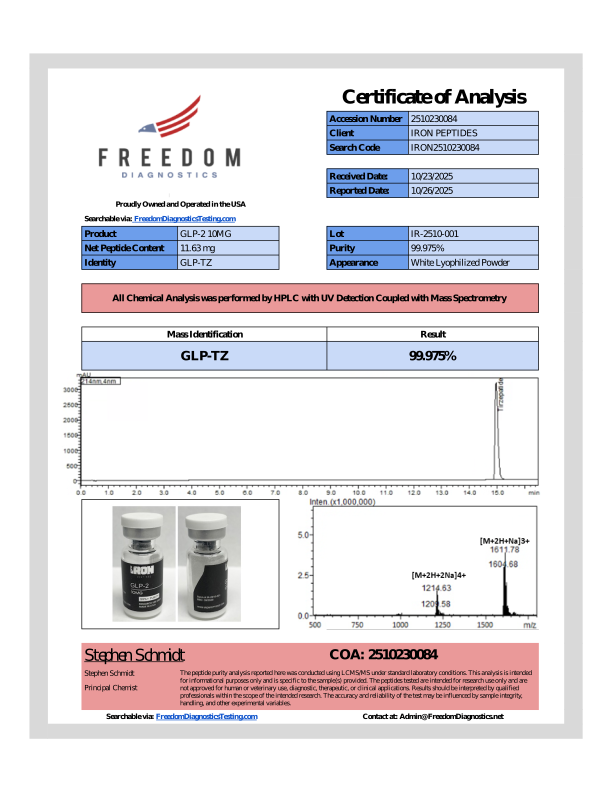
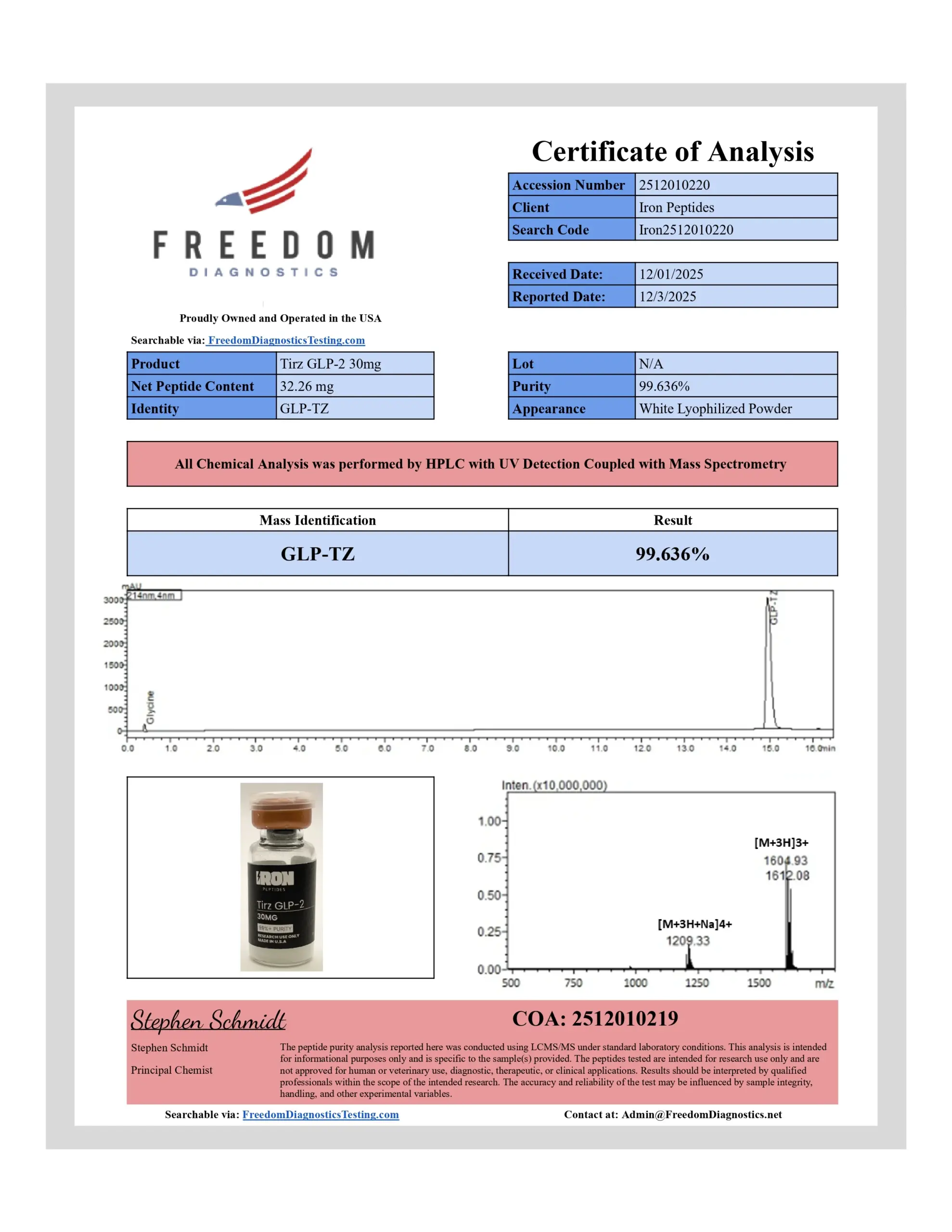
T-GLP-2 is a synthetic, long-acting peptide analog designed as a dual agonist of the GLP-1 (glucagon-like peptide-1) and GIP (gastric inhibitory polypeptide) receptors. This dual-agonist profile combines incretin-mimicking activity to enhance insulin secretion and regulate appetite—offering significant therapeutic potential for type 2 diabetes and adipose tissue management.
Chemical Structure of Tirz GLP-2
-
Peptide Length: 39 amino acids, based on the GIP sequence, with modifications from GLP-1 and unique residues.
-
Non-standard Modifications:
-
Two α-aminoisobutyric acid (Aib) residues at positions 2 and 13, enhancing stability and prolonging half-life.
-
A C-terminal amidation and position-20 lysine side chain acylated with a C20 fatty diacid moiety via γ-Glu and bis-(aminoethoxy) linkers, increasing albumin binding and enabling once-weekly dosing
-
-
Molecular Formula: C₂₂₅H₃₄₈N₄₈O₆₈
-
Molecular Weight: Approximately 4,813.45 Da
What Are the Effects of Tirz GLP-2?
Pharmacology & Mechanistic Overview
This compound is studied as a dual agonist of GLP-1 and GIP receptor pathways, exhibiting greater relative affinity for the GIP receptor while maintaining measurable GLP-1 receptor activity. Research focuses on how simultaneous incretin pathway engagement influences metabolic signaling networks in controlled experimental models.
Mechanistic Research Findings
-
Incretin Signaling Modulation
Investigated for its role in co-activation of GLP-1 and GIP–associated signaling cascades, with studies examining downstream effects on glucose-related and energy-balance pathways. -
Adipose-Related Signaling Pathways
Explored in research models for associations with adipocyte signaling, lipid metabolism regulation, and energy storage dynamics, without reference to clinical outcomes. -
Glycemic Regulation Mechanisms
Studied for involvement in insulin-responsive signaling pathways, glucagon modulation mechanisms, and pancreatic β-cell signaling, as observed in laboratory and preclinical settings. -
Pharmacokinetic Properties
Characterized for its fatty-acid modification and albumin-binding behavior, which are examined for their influence on molecular stability, receptor exposure duration, and circulation persistence in experimental analyses.
Research Context & Implications
Often described in the literature as a “twincretin” research compound, this dual-pathway design is explored for how multi-receptor engagement may alter metabolic signaling efficiency compared to single-receptor investigational agents.
Its structure and receptor profile are contributing to ongoing research into multi-pathway endocrine signaling models, informing broader scientific discussions around complex metabolic system modulation.
Related products

Vial

Vial


Vial

Vial


Vial

Vial